Introduction
Venus Fly Trap
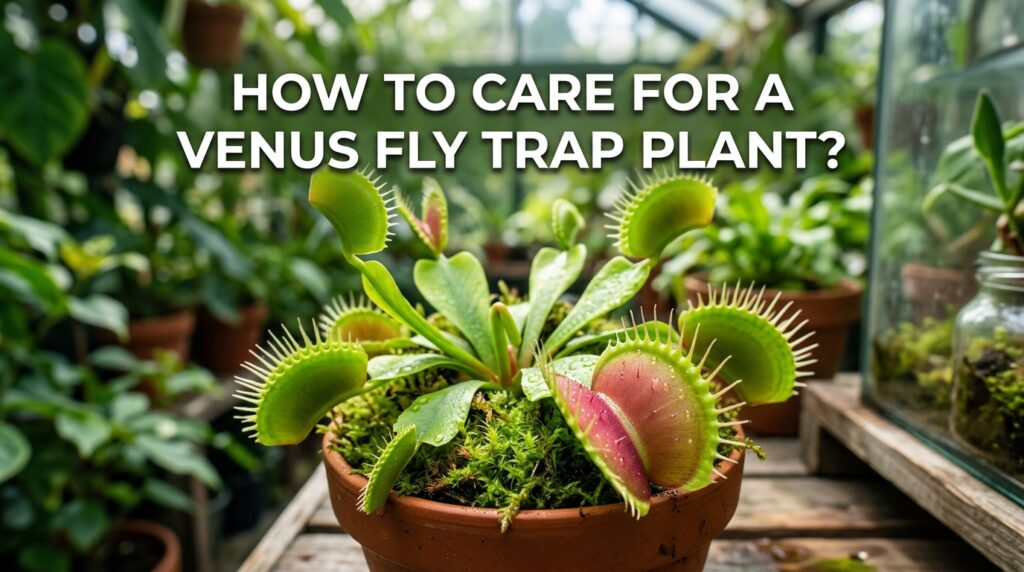
A Venus flytrap may seem like it’s a difficult plant to grow. It catches insects, snaps its traps shut in seconds and has very different needs compared to most houseplants. But once you know what those needs are, caring for one becomes much easier. In this guide by MPR Landscapes, we’ll go over everything you need to know about venus fly trap care.
Quick Answer
To take care of a Venus flytrap:
- Provide it with a minimum of 4-6 hours of direct sunlight each day.
- Grow it in nutrient poor soil.
- Water it only with rainwater for plants. Alternatively, distilled water or reverse osmosis water is okay too.
- Feed it small insects only when needed. No human food though.
- Make sure to avoid fertilizer burn by never using fertilizers.
- Allow the plant to go through its natural winter dormancy each year.
Following these simple care requirements is going to help keep your Venus flytrap healthy for years.
Venus Fly Trap Plant: Understanding This Unique Carnivorous Plant
The Venus fly trap plant is unlike any other plant on earth. It is native to a small geographic range of coastal bogs in North and South Carolina. In this nutrient-poor wetland environment, the plant evolved one of the most sophisticated survival strategies in the plant kingdom: carnivory.
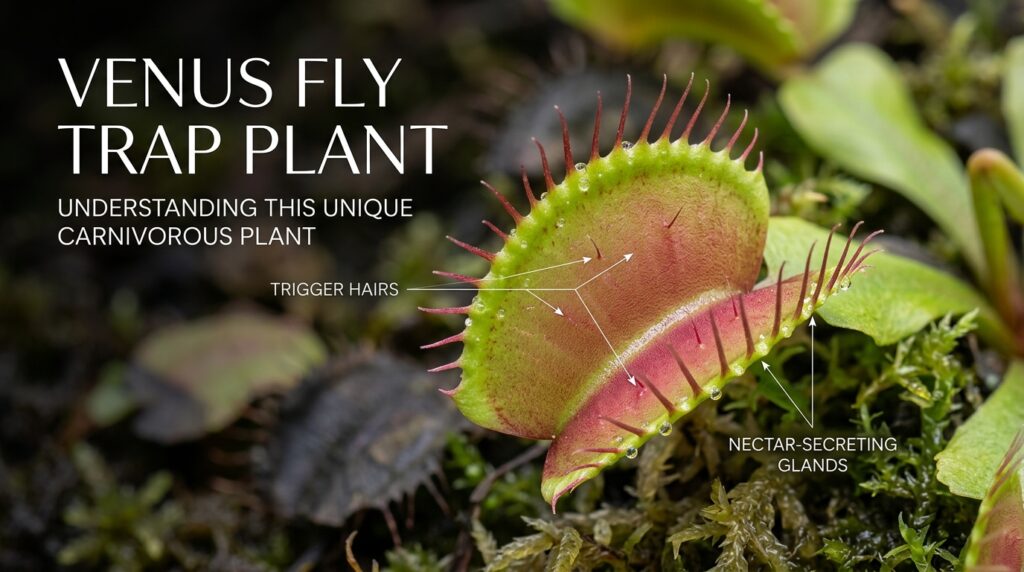
Each trap is a highly modified leaf made up of two hinged lobes lined with sensitive trigger hairs plant. If an insect touches a hair twice or two hairs in quick succession within 20 seconds, an electrical charge causes the trap closing mechanism to snap shut in as little as one tenth of a second. This two touch mechanism is a clever adaptation that prevents the plant from wasting energy snapping shut on raindrops or falling debris.
Once prey is caught and continues to struggle, it stimulates the trigger hairs even further. As a result, it signals the plant to form an airtight seal. Inside this sealed “plant stomach,” the plant digestion process breaks down the insect’s soft tissues over the course of five to twelve days.
Carnivorous plant care starts with understanding that Venus flytrap plants do not rely on insects for energy. They photosynthesize like all other plants. Insects are a supplemental fertilizer providing nitrogen and phosphorus that their acidic soil simply cannot offer.
Common prey includes ants, spiders, beetles and grasshoppers. These insect eating plants may also occasionally catch flies, bees and gnats.
Note: Crawling insects and arachnids make up the majority of their natural diet. Not the flying ones, despite the plant’s famous name.
Each individual trap can only capture and digest approximately three to five meals before it loses function and falls off. This is completely normal and not a sign that your plant is dying.
How to Take Care of a Venus Flytrap?
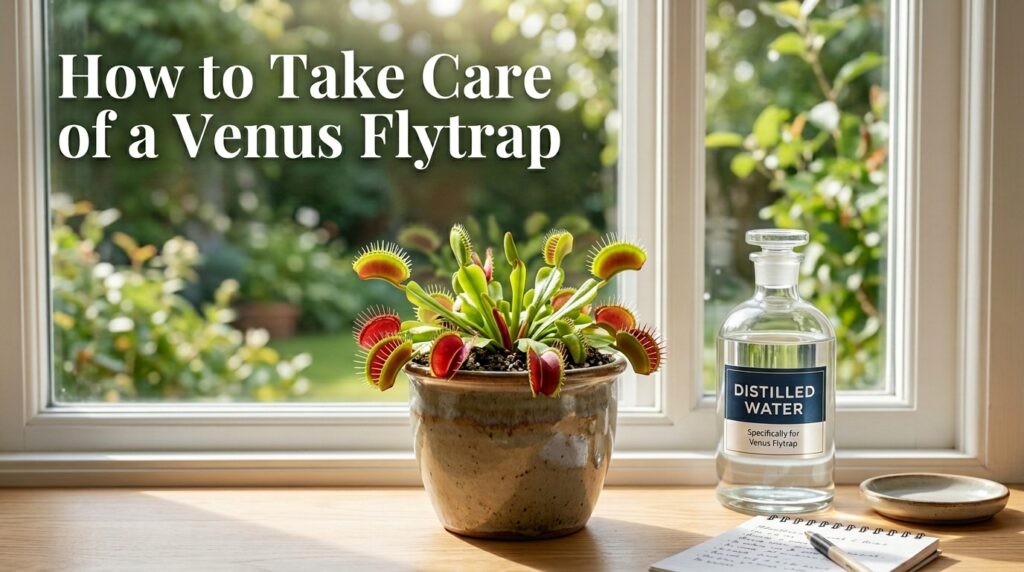
Good venus flytrap care guide starts with one fundamental principle: replicate the plant’s native bog environment as closely as possible. This means intense light, mineral free water and nutrient-poor soil. These are non-negotiables.
Dionaea muscipula care requires you to commit to a few rules from day one. For instance:
- Watering: Use only rainwater. Watering carnivorous plants with distilled water or reverse osmosis water only is recommended. The Total Dissolved Solids (TDS) reading should be below 50ppm. Avoid tap water at all costs as tap water, bottled water and even filtered water contain dissolved minerals that act as poison to the plant. The most reliable method is the tray method. Sit the pot in a shallow saucer with about one inch of pure water and let the soil moisture control happen naturally by wicking moisture upward. The water level should remain at least two inches below the soil surface to prevent overwatering problems.
- Sunlight: Healthy venus flytrap plant care demands a minimum of four to six hours of natural light exposure daily. About eight hours is ideal. Indoors, a south facing window placement is your best option. However, it often is not enough on its own. Use a grow light alternative such as high-output, full-spectrum LED grow lights running for 12 to 16 hours a day. A well-lit plant will develop a vibrant red interior in its traps. Pale, all-green, spindly growth showing weak plant growth is a reliable sign of insufficient light.
- Feeding: Feed one or two traps per plant every one to two weeks during the active growing season. Only offer live insects feeding or rehydrated freeze-dried bloodworms. Always follow the one-third rule when feeding a Venus flytrap. Prey must be no larger than one-third the size of the trap so the plant can form a proper airtight seal. If you’re feeding dead or freeze-dried food, gently massage the sides of the trap after it closes to simulate a live insect’s struggle and trigger digestion. Make sure to avoid overfeeding plants at all times.
- Maintenance: Cut flower stalk off as soon as they appear in spring unless you intend to harvest seeds. Flowering consumes significant energy. Trim blackened traps to prevent mold. Repot every six to twelve months in fresh carnivorous plant media to prevent mineral buildup. These are indoor gardening tips every owner should follow.
How to Look After a Venus Flytrap?
Learning how to care for flytrap through seasonal changes is just as important as day-to-day watering. One of the most critical and most overlooked aspects of long-term care is the plant dormancy period.
From November through February, the plant enters a plant hibernation stage or natural “winter nap.” Growth slows or stops entirely. Leaves may turn black and die back to the soil. New traps, if they form at all, remain small and low to the ground. This is completely normal dormant plant care behavior driven by the seasonal rhythms of the plant’s native environment.
To support a healthy dormancy, move the plant to a cool environment. In Toronto’s climate, avoid leaving the plant on an unheated outdoor porch, as temperatures can drop far below the safe range. A cool, unheated garage (kept above freezing), a basement, or a cold indoor windowsill away from drafts is a safer option.
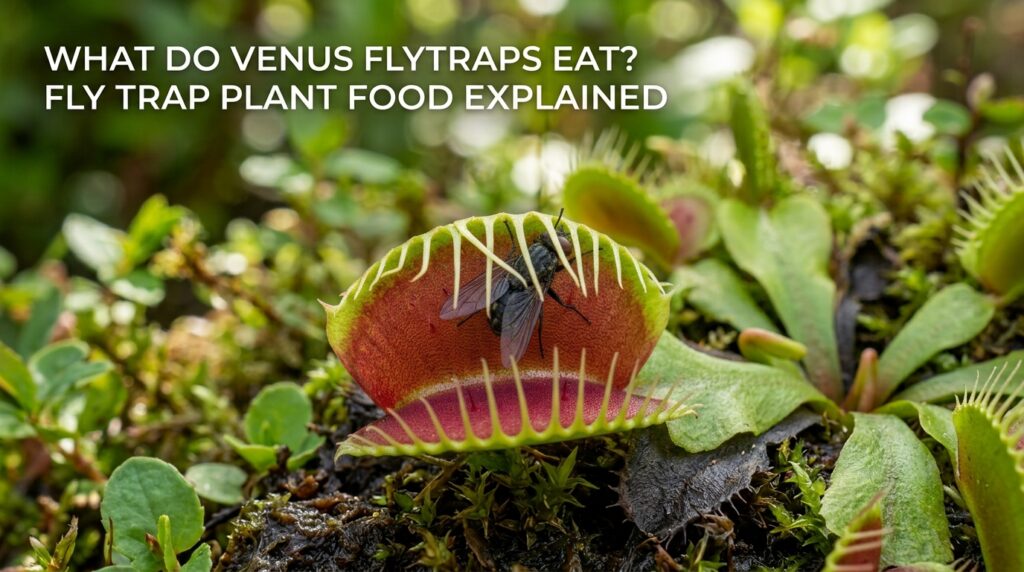
What Do Venus Flytraps Eat? Fly Trap Plant Food Explained
The best fly trap plant food is whatever the plant would encounter crawling across a bog. This means ants, spiders, beetles, grasshoppers and small crickets. For outdoor plants this is not a concern as natural feeding happens on their own. For indoor plants, you will need to step in.
Freeze-dried bloodworms, rehydrated with a few drops of pure water for plants into a small meatball, are widely considered the easiest and most nutritious option. Mealworms are another excellent choice although larger ones may need to be cut into appropriately sized pieces for smaller traps. Small dried or live crickets also work well for adult plants.
What you should never feed them is human food of any kind. No meat, cheese, chocolate or fruit. Animal fats and sugars will cause the trap to rot. This is one of the most common beginner gardening errors new owners make. Insects that have been exposed to insecticides are also off the table.
Three rules to always follow: use the one-third size rule, stimulate the trap after it closes if feeding dead food and follow the right plant feeding cycle by not overfeeding. One trap every one to two weeks is plenty during the growing season.
What Is the Best Fly Trap Soil for Healthy Growth?
The best soil for carnivorous plants mirrors the plant’s native bog: nutrient-poor, acidic and moisture-retentive. Standard potting mix or any soil containing added fertilizers is essentially a death sentence. It causes plant root damage almost immediately.
The most widely used organic soil mix for Venus flytraps is a simple 1:1 ratio of unfertilized sphagnum moss soil and perlite or silica sand. Here is why:
- Peat provides the acidic, mineral-free base and retains moisture.
- Perlite soil mix improves drainage and prevents the mix from compacting into a root-suffocating brick.
For growers who want more precision, two popular enhanced ratios are:
- 4:2:1 Mix: 4 parts peat moss soil mix, 2 parts perlite, 1 part silica sand. Balances moisture retention with drainage.
- 5:3:2 Mix: 5 parts peat moss, 3 parts silica sand, 2 parts aerated soil mix. Some growers report strong root development with this blend.
Another option gaining popularity among experienced growers is premium long-fiber sphagnum moss, particularly New Zealand grade. Plants tend to grow faster and recover more quickly from repotting. But quality matters. Low-grade LFS can turn to mush and cause rot.
A few plant potting tips to keep in mind: always rinse your soil mix with distilled or rainwater before use to flush out trace minerals. Sift peat moss through a quarter-inch mesh to remove debris. Verify that your perlite contains no fertilizer additives. Use plastic pot or glazed ceramic pots with drainage holes and avoid unglazed terra cotta. Pots should be at least four to five inches deep to accommodate the plant’s long root system.
How Do You Plant a Venus Flytrap?
First, prepare your soil. Use a 1:1 or 4:2:1 ratio of peat moss and perlite. Moisten it with distilled or rainwater before adding it to your pot. Keep soil damp but never soaking wet.
Next, choose the right pot. Use a plastic or glazed ceramic container for gardening plants with drainage holes. It should be at least four to five inches deep.
Now place your plant. Dig a small hole and put the plant in. The white bulb-like base called the rhizome should sit underground. The small traps should stay just above the soil surface.
Then firm the soil gently around the roots. Water it thoroughly with distilled or rainwater. Avoid waterlogging at all times as this leads to root rot and underwatering issues if the balance is not maintained.
Planting from seeds? Follow this:
- Scatter the seeds on top of moist soil. Do not bury them because they need light for seed germination.
- Keep the temperature between 75°F and 90°F.
- Make sure there is 50 per cent humidity or higher and bright, indirect light. Seeds usually germinate within ten to thirty days.
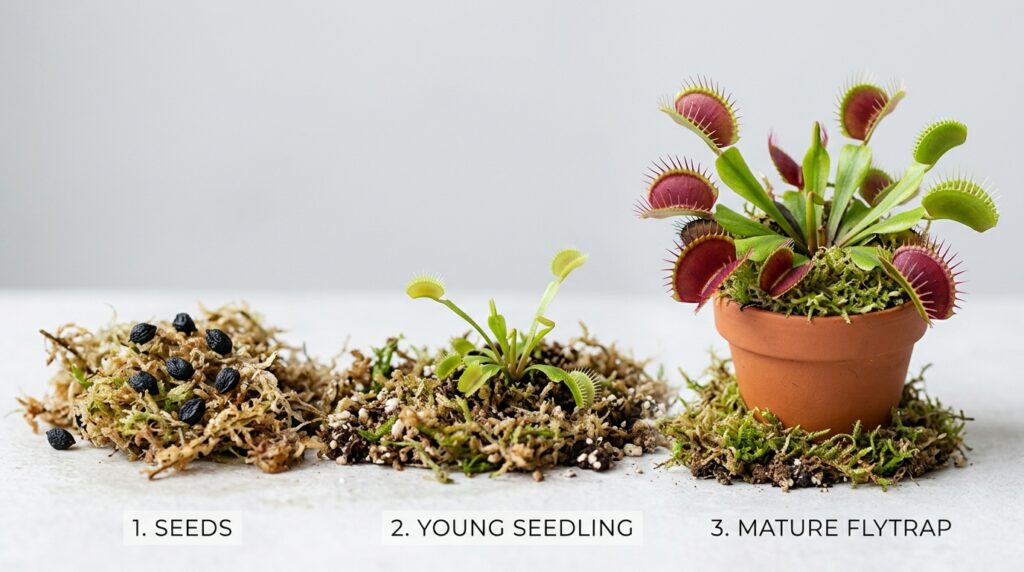
Venus Fly Traps Life Cycle: From Seed to Mature Plant
Venus flytraps are slow-growing but remarkably long lasting plants, capable of surviving twenty years or more in the wild. Here is how the plant lifecycle stages unfold:
- Year 1: Tiny sprouts emerge from black seeds. This usually begins in March. The plant is no larger than a penny. Its traps are only one to two millimeters long. This is the earliest of the plant development cycle stages.
- Year 2: After its first dormancy, the plant grows to roughly one inch wide with traps around three-eighths of an inch.
- Year 3: The plant reaches about two inches across. By now it has half-inch traps and may enter the plant blooming phase by sending up its first flower stalk in spring.
- Years 4 to 6: The plant reaches plant maturity and flowers annually. It may also split underground to produce new bulbs through plant reproduction and natural division.
Conclusion
The Venus flytrap is unique. But it is not difficult to grow. It simply needs the right conditions to thrive. Give it intense light as well as mineral free water every day. Use acidic soil and never add fertilizer. Feed it small insects or bloodworms once every two weeks. Always allow it a proper plant rest phase each year. Do that and this extraordinary little carnivore will thrive for twenty years or more.
For those who want expert help, MPR Landscapes is a trusted, family-owned landscaping company serving the Greater Toronto Area. Our qualified team offers professional lawn care, garden maintenance and landscape design services. We give your green spaces the expert attention they deserve. Feel free to contact us to get a quote today.
FAQ Section
How Big Do Venus Flytraps Get?
A mature Venus flytrap typically reaches 6 to 12 inches in height. In width, it reaches 6 to 9 inches. Individual traps on a standard plant measure around two to three centimeters or roughly one inch long. This is part of the natural venus flytrap growth stages every owner should understand.
Where Can You Buy a Venus Flytrap?
You can buy it in Canada from several sources. Specialty carnivorous plant nurseries are the best option. They offer healthy, nursery grown plants and ship across the country. Local plant shops in Toronto often carry them and may offer same-city delivery. These are great exotic plant care starter sources for beginners. Always make sure the plant is commercially grown.
More Website : Meadowvale Party Rentals Or MPR Movers