
Introduction
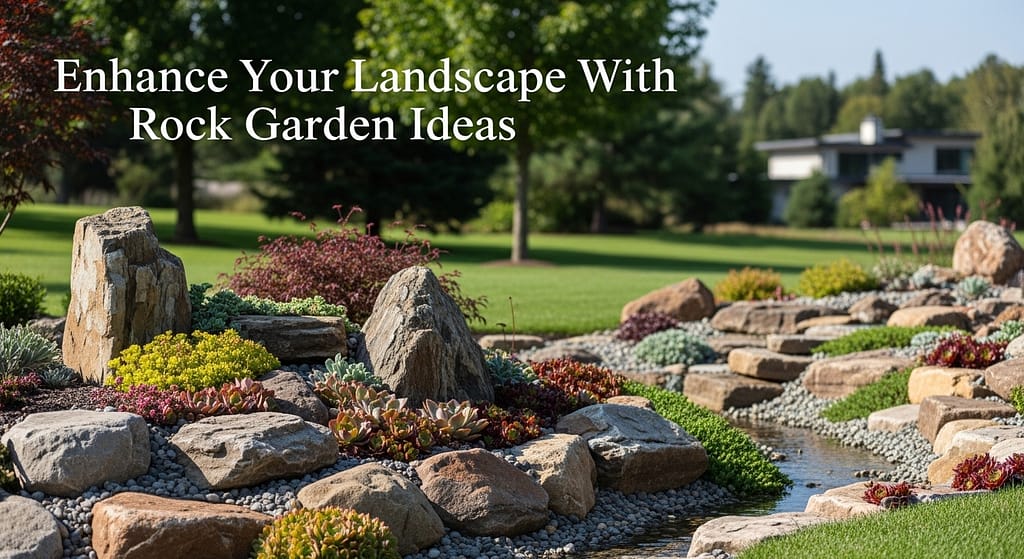
A rock garden is a beautiful space in your lawn made of stones and plants that needs very little water to stay pretty. To build one, you find a nice and sunny spot in your lawn. Then, place large stones firmly in the ground and tuck hardy plants between the cracks. This gives a beautiful, natural look. And the best part? You do not need a big yard to make this happen! Even a tiny corner can become a peaceful spot with the right rocks. This blog by MPR Landscapes will show you how to enhance your lawn with rock garden ideas. You will learn to make a garden that lasts for many years without much effort.
What Is A Rock Garden?
A rock garden is more than just a pile of stones in the dirt. It is a planned space where rocks are the main feature. Most gardens focus only on green grass or bright flowers, but a rock garden? It uses the shapes of boulders to create a view. These gardens are best for places where grass does not grow well. They handle heat well and stay beautiful… even when the weather is dry.
How Do You Make A Rock Garden?
Building something with your hands connects you to the land in a way that words cannot describe. Making a rock garden takes some physical work but it is very rewarding. You start by clearing the area of all weeds. Then you think about how you want the water to flow. You do not want puddles staying around your rocks. You should dig a shallow hole for your biggest stones. This makes them look like they grew out of the ground. It stops them from rolling away too. Then you add a special dirt mix. This mix helps the water go away fast so the roots do not rot. It is like building a puzzle where every piece is heavy.
What style of rock garden should you choose?
Choosing the right location is the first step in creating a successful rock garden. Nature offers plenty of guidance if we take the time to observe it. Sun, wind, and natural landforms all point us toward places where a rock garden will thrive and look at home.
- Choose a sloped area to allow natural water drainage and prevent soggy soil.
- Select a spot that receives plenty of sunlight throughout the day.
- Avoid flat, open lawns unless there is a clear design reason for placement.
- Place the rock garden near a fence, wall, or corner to create a natural transition.
- Aim for a location where the garden blends into its surroundings and feels established.
What are modern rock garden ideas?
Garden beauty often hides in the simple lines and clean spaces we create when we clear away the clutter. Modern designs use straight edges and simple colors to enhance garden architecture or garden visual cohesion. You can use black lava rocks for a bold look. Or you can use white marble chips. Some people use metal hardscape border stones to keep the rocks in place. This looks very sharp and clean. You can add a single big boulder as a statue which becomes a focal point for the eye. Sometimes people add outdoor garden lighting under the rocks. This makes the garden glow at night. It looks very fancy. It is one of the simple rock garden ideas.
How do you plan a rock garden layout?
A good plan is like a map that leads you toward a peaceful place without any stress. You must think about the rock garden layout before you move a single stone. Consider the scale of your yard. If you have a small yard, do not use giant rocks. Use medium ones instead. Balance is also very important. Do not put all the heavy things on one side. You want the view to flow naturally from one end to the other. Imagine how a person will walk past it.
- Draw a sketch on paper first.
- Mark where the biggest rocks will go.
- Leave space for walking paths.
- Group stones in odd numbers like three or five.
- Make sure the height varies across the garden.
How do you choose the right location for a rock garden?
The sun and the wind know the best places to rest and we should follow their lead. A garden hardscape slope is a perfect spot for rocks. The slope helps the water run off naturally. This creates a dry landscape that plants love. You want a spot that gets plenty of sunlight. Many rock plants come from high mountains. They love the bright sun. But you also want it to look natural. Do not put it in the middle of a flat lawn for no reason. Put it near a fence or a corner. This gives it a natural appeal. It should look like it has always been there.
How should you prepare soil and drainage for a rock garden?
Deep roots need a firm foundation and a clear path to drink without ever drowning. That’s why rock garden drainage is the most important part of the entire build. Most regular garden soil is just too heavy. It holds water like a soaked sponge. And that’s the fastest way to lose plants.
You want sharp, fast drainage that supports long-term rock landscaping and healthy roots. Then start by removing the top layer of grass so you’re working with clean ground. Next, lay down a weed barrier or mulch in open areas between rocks. This is to support long-term garden weed control.
After that, add a solid layer of crushed gravel. This becomes the backbone of your drainage system and helps manage rock garden site moisture, especially after heavy rain. But gravel alone isn’t enough. You’ll need to mix sandy soil into your planting mix. Small grit or tiny pebbles help too. This soil amendment loosens the earth and improves rock garden soil requirements without holding excess water.
Then place your stones and boulders, keeping rock balance in mind so everything feels stable and natural. Fill the gaps between rocks with your amended soil mix, pressing it in gently so plants have support but roots can still breathe.
Which stones are best for a rock garden landscape?
The earth offers us many different treasures and each stone has its own unique color and feel. Rock garden materials selection depends on what is near you. It is cheaper to buy rocks that are local.
- Sandstone is very pretty and warm.
- Granite is strong and lasts forever.
- Limestone has neat holes and textures.
Do not mix too many types of rocks. It will look messy. Pick one main type of stone. Then get different sizes of that same stone. This makes the garden look like a real part of nature. Smooth river rocks are good for paths. Jagged rocks are better for hills.
How do you arrange rocks for a natural look?
When we place stones with care, we honor the way the mountains have stood for millions of years. Rock placement is an art. You should bury the bottom third of each rock. This makes it look heavy and old. If you just sit them on top of the grass, they look like they fell off a truck. Group your rocks together. This is called rock grouping. Leave different sized gaps between them. This is where the plants will live. Turn the rocks so the “pretty side” faces out. Rock naturalness comes from being slightly messy. Do not make a perfect line of stones.
How do you add paths, edging, and borders to a rock garden?
A path is an invitation to walk slowly and notice the small beauties hidden near the ground. A stepping-stone path is a great idea. It lets you walk through the garden without stepping on plants. You can use flat stones for this. Hardscape garden borders keep the rocks from spreading into your grass. Garden edging can be made of metal or plastic. Or you can use a line of smaller stones.
- Use flat rocks for easy walking.
- Space them out for a natural stride.
- Fill gaps with tiny pebbles.
- Keep the edges clean with a shovel.
- Make the path curve for more interest.
What plants grow best in a rock garden?
Green leaves and bright petals are the soft whispers that balance the heavy silence of the stones. Rock garden plants need to be tough. Alpine plants are the best choice. they grow in high places with lots of wind. Groundcovers are good too. They spread out like a living carpet over the rocks. You should look for drought-tolerant plants. These do not need much water.
- Sedum is a very popular choice.
- Thyme smells great and stays low.
- Hens and Chicks are fun succulents.
- Creeping Phlox adds bright spring colors.
- Blue Fescue is a pretty blue grass.
- Lavender adds a nice tall shape.
How do you make a low-maintenance rock garden?
We often seek a simple life and a garden should be a place of rest, not a list of chores. A low-maintenance design (or a budget‑friendly garden) is built on garden sustainability. Use plants that belong in your area. They will grow better without help. Use a thick layer of gravel on top of the soil. This stops weeds from growing. It also keeps the soil cool. You will not have to mow this area. You will not have to water it every day. This saves you a lot of time and money. It is a smart way to have a pretty yard.
How do you maintain a rock garden year-round?
Caring for a garden is a way of showing love to the earth through every changing season. Rock garden maintenance is mostly about weed control. Even with a barrier, some weeds will try to grow. Pull them out as soon as you see them. This keeps the garden upkeep easy. In the fall, blow away any dead leaves. Leaves can rot and hurt your rock plants. Here are some rock garden tips for maintenance.
- Check for shifting rocks after rain.
- Trim back plants that grow too big.
- Add a little fresh gravel every year.
- Remove dead flower heads in summer.
- Wash the dust off the rocks sometimes.
- Check for pests under the stones.
- Ensure drainage holes stay clear.
What are the Best Rock Garden Ideas for Small Yards?
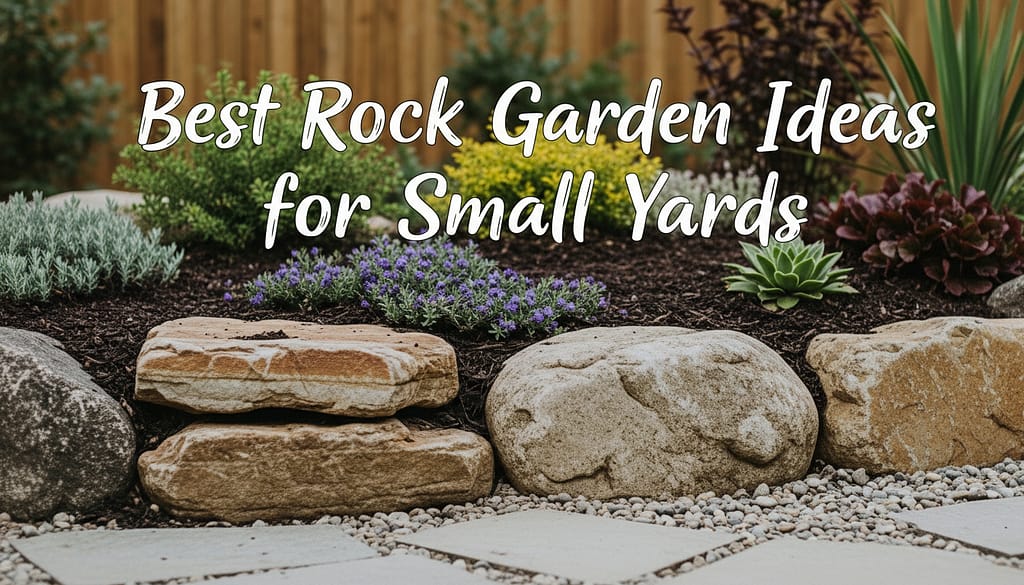
Small spaces can hold big dreams if we choose to fill them with beauty and purpose. You do not need an acre to build a rock stone garden. A small corner near your porch is a great spot for creating aesthetic landscape designs with rocks.
Zen Rock Garden
Minimal and open. Uses sand or gravel with carefully placed large rocks in garden designs. Raked patterns mimic water and make the space feel calm and uncluttered.
Japanese Rock Garden
Natural and timeless. Combines moss, stone lanterns, and weathered stone. This style brings quiet beauty to a large rock garden, especially in shaded or side-yard spaces.
Alpine Rock Garden
This uses lots of tiny, colorful plants. It mimics the top of a mountain. You can build it up high. This uses vertical space instead of ground space.
Dry Landscape Rock Garden
This is one of the best stone garden landscaping (or rock garden landscaping) ideas. Because this uses very little water! It uses different colors of gravel to look like a river and it is very easy to care for. The best part? It looks good even in the winter.
Drought-Tolerant Rock Garden
This is full of cacti and succulents. These plants have cool shapes. They do not need a lot of dirt. They can grow in the tightest spots between rocks.
Rock Garden Path With Stepping Stones
Instead of a sidewalk, using rocks in landscaping is more versatile. It guides people through your yard. It creates a journey in a small area. For example, using flat slate stones creates a very smooth and modern path for guests to follow.
Rock Garden Border Hardscape Design
Use rocks to line your driveway. It keeps the dirt off the pavement. It looks much better than a plastic fence. It adds a lot of style to the front of your house.
Modern Rock Garden Designs
Use square stones and metal. It looks very expensive. It matches modern houses perfectly. It uses very few plants for a clean look.
Small-Scale Natural Rock Garden
Just use three rocks and a few tufts of grass. This is the easiest one to make. It fits in a circle only three feet wide. Anyone can do this.
What Plants Grow Well in a Rock Stone Garden?
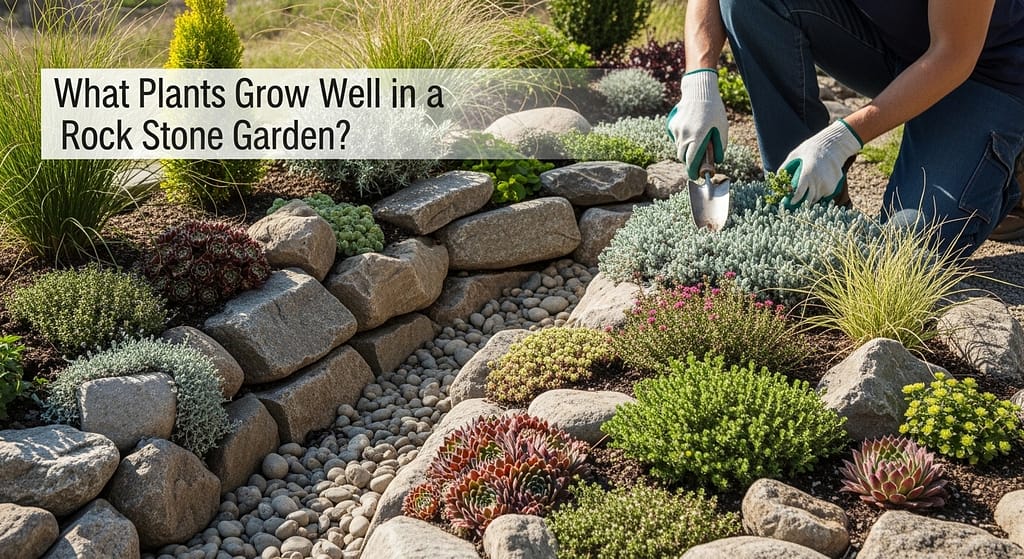
Life finds a way to bloom even in the hardest places when we give it a little care. Choosing the right plants makes your garden stay green all year. Here are some plants for stone garden ideas.
| Plant Type | Growing Conditions |
| Alpine plants | Full sun, sharp drainage, rocky or sandy soil |
| Groundcovers | Sun to shade, low water once established |
| Creeping groundcovers | Tight spaces between stones, good drainage |
| Ornamental grasses | Sun to partial shade, dry to average soil |
| Sedges | Sun to shade, adaptable, low maintenance |
| Shade-tolerant plants | Partial to full shade, moisture-retentive pockets |
| Ferns | Shade, cooler microclimates among rocks |
| Mosses | Shaded, moisture-rich crevices |
| Drought-tolerant plants | Full sun, dry conditions |
| Succulent plants | Full sun, excellent drainage |
| Bulbs | Full sun, seasonal interest with minimal care |
| Perennials | Sun to partial shade, well-drained soil |
| Small shrubs | Full sun, provide structure and scale |
| Dwarf conifers | Sun to partial shade, year-round garden structure |
Conclusion
A garden is a reflection of the patience and the beauty we carry within our own hearts. With this blog, you have learned how to pick the best rocks. You know which plants will survive the heat. You can now design a layout that fits your home perfectly. Remember to start small and have fun with it! You can also reach out to professionals like MPR Landscapes. We’ll get it done with precision so you can enjoy a garden ambience that feels balanced and natural.
FAQ Section
How do I design a rock stone garden at home?
Start by looking at the natural shape of your yard. You should pick a spot that already has a bit of a hill. Buy rocks that look like the ones in your local area. Put the big ones in first. Then fill the space with smaller stones and dirt. Finally, add your plants.
How much does it cost to create a rock garden?
The cost can be very low if you find rocks for free. Sometimes neighbors want to get rid of stones. If you buy them, it might cost a few hundred dollars. Large boulders are the most expensive part. Buying small plants and gravel is usually quite cheap.
Can rock gardens work in front yards and backyards?
Yes, they look great in both places. The front lawn rock garden improves your curb appeal. They make the house look finished. In the backyard, they create a private spot for relaxing. They work well against walls or under trees where grass is hard to grow.
