
Introduction
Zen Garden Ideas :
Creating a peaceful space at home is a dream for many people today. Life feels very fast and loud most of the time. You might want a place where the world slows down. A Zen Garden is the perfect solution for a busy mind. These gardens come from ancient traditions in Japan.
They use simple things like rocks and sand to tell a big story. You do not need a lot of money to start one. You only need a small patch of ground and some focus. This blog, by MPR Landscapes, will help you understand the roots of these gardens. We will look at how to build one in your own yard. Get ready to transform your outdoor area into a beautiful, tranquil garden that brings true peace!
What is a Zen Garden?
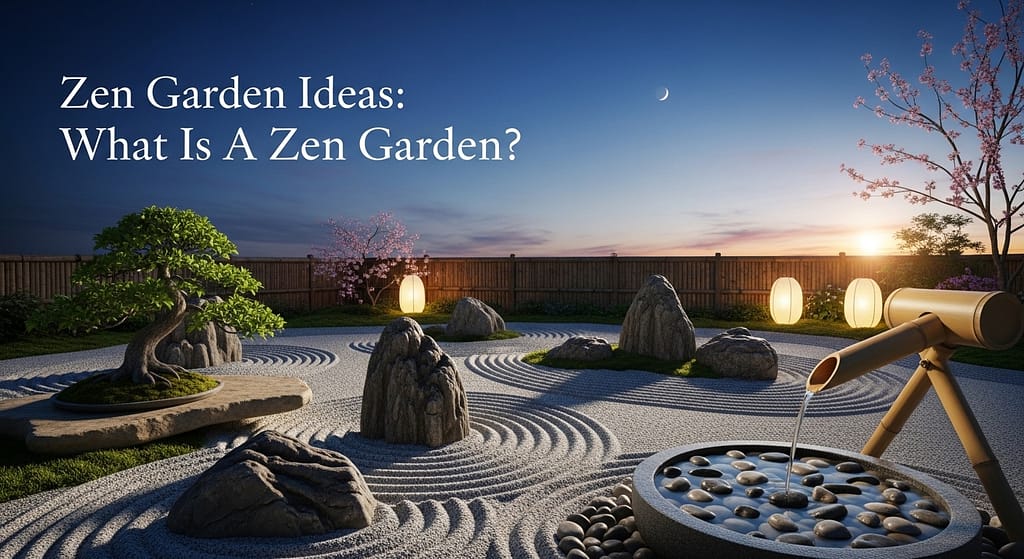
A Zen Garden is often called a karesansui. This name means a dry landscape. It is a special type of Japanese garden that does not use much water. Instead of ponds or streams, it uses sand or gravel. The sand represents the ocean. The rocks represent islands or mountains. It is a minimalist garden by design. There are no bright flowers to distract your eyes. Everything is green, grey, or white. This creates a very quiet garden feel.
You see these gardens at temples in Japan. They look like a painting made of earth. It is a naturalistic garden because it follows the rules of nature. The shapes are not perfect squares. They are soft and organic.
What is the Purpose of a Zen Garden?
The main goal is to help you think.
It is a contemplation space for anyone who enters. Japanese Buddhist monks used these gardens for many centuries. They did not just look at the garden; they worked in it to clear their minds. The garden acts as a tool for a meditation garden. It helps you focus on the present moment. You can leave your stress at the gate. The stillness (seijaku) of the rocks reminds you to be still inside. It provides a year-round appeal because it does not change with the seasons. It stays the same in winter and summer. This makes it a seasonless garden and it:
- Provides a place for deep breathing.
- Teaches you about the beauty of simplicity (kanso).
- Encourages a slow pace of life.
- Creates a garden sanctuary in a city.
How to Build a Zen Garden
Building a Japanese rock garden is a fun project. You can find many Zen garden ideas on a budget if you look around. You just need a good plan and some physical work.
Step 1: Site Selection
Find a good spot in your yard. A flat site is best for the sand. You can use a side yard or a corner garden. Even a narrow yard works well. Make sure the area is a quiet space.
Step 2: Measurements and Design
Take your measurements carefully. Draw a design sketch on paper. This is your layout plan. You do not need a professional landscape designer for a small space. Just keep it simple.
Step 3: Clear the Ground
Remove all weeds and grass. Dig down a few inches. This makes room for the hardscape materials. You want a clean slate for your Zen sand garden.
Step 4: The Enclosing Wall
Use a fence or an enclosing wall. This separates the Zen garden from the rest of the world. It keeps the peace inside the box. You can use wood or stone.
Step 5: Lay the Fabric
Put down landscape fabric. This helps with drainage. It also stops weeds from growing through your gravel garden. This makes it a low-maintenance garden.
Step 6: Rock Placement
Place your large rocks first. These are the rock elements of your design. Use an odd number of rocks. Asymmetry (fukinsei) is a key rule in Japan. Do not put them in a straight line.
Step 7: Add the Sand or Gravel
Fill the area with light-colored gravel. This is the sand garden part. Use a rake to make it level. The sand texture should be fine and smooth.
Unique Japanese Zen Garden Ideas for Your Home
Exploring different ways to set up your Zen garden helps you find the right fit for your soul. You can use these themes to create a tranquil garden that feels personal and deep. Each idea uses Zen principles to turn a simple yard into a meditation garden.
The Floating Mountain Island
This design focuses on the power of rock placement to mimic the high peaks of Japan. You use a large sand garden to act as the ocean. In the middle, you place a group of stones that look like islands. It is a classic Japanese rock garden look that feels very vast. This creates a strong sense of asymmetry (fukinsei) which is pleasing to the eye. You want to use rocks that have a rough stone texture to show age.
- Pick one very tall rock to be the main mountain.
- Surround the base with smaller pebble piles to hide the edges.
- Rake the sand garden in circular rings around the stones.
- Keep the rest of the gravel in long straight lines like a calm sea.
- Use a dark grey gravel texture to make the “islands” pop.
The Mossy Forest Retreat
If you have a shady spot, a moss garden is a beautiful, naturalistic garden choice. Moss creates a soft green carpet that feels very old and quiet. This is perfect for a low-maintenance Japanese garden design because moss does not need mowing. It brings a sense of stillness (seijaku) to a side yard. You can add a small Japanese stone lantern (toro) among the green mounds.
- Check your soil to ensure it stays damp for the moss.
- Use soil amendment if your ground is too sandy or hard.
- Place weathered boulders half-buried in the mossy ground.
- Add a few evergreen shrubs that you prune into tight rounds.
- Keep the material palette very dark and earthy.
- Ensure the area has a good enclosing wall to trap moisture.
The Dry River Path
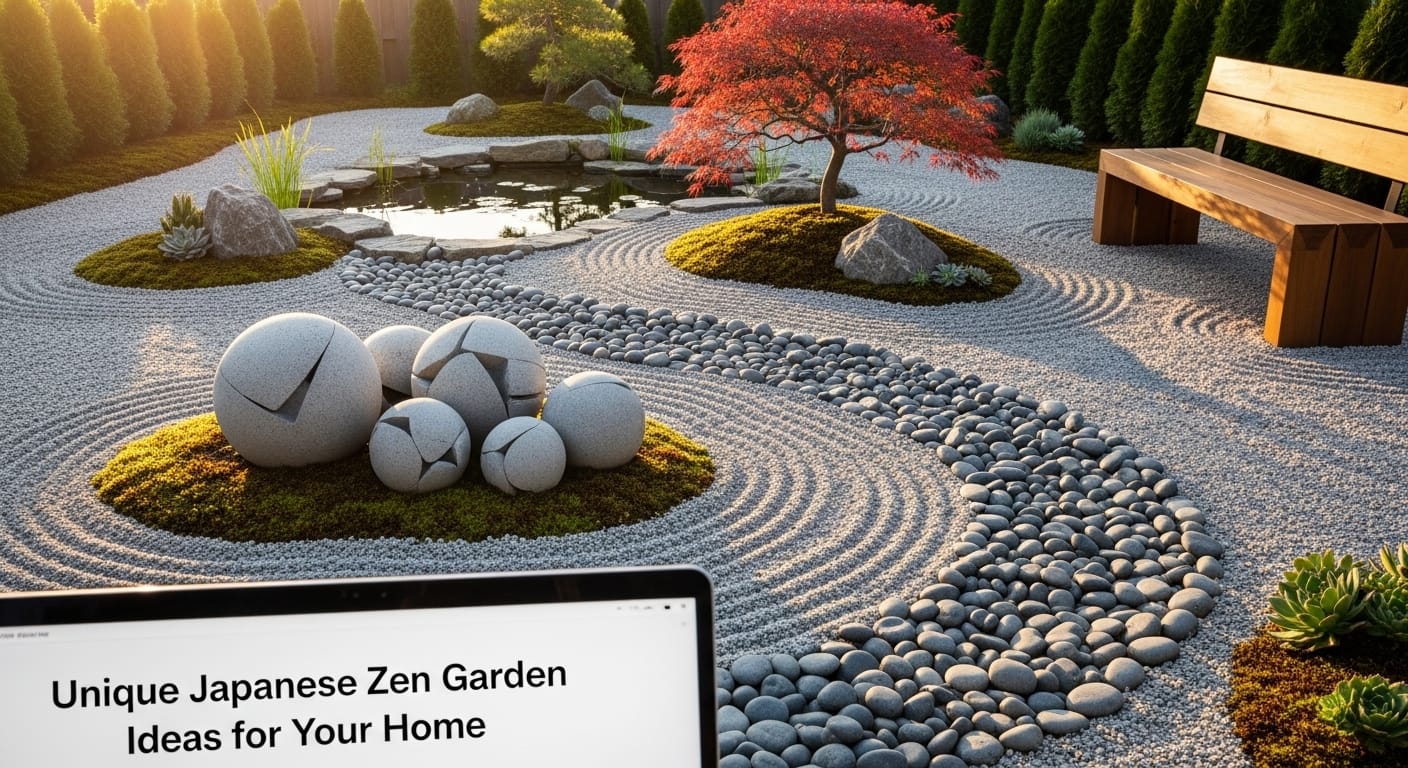
This easy Zen garden design uses different colors of stone to look like a moving stream. You do not need real water for this dry landscape. You use smooth river stones for the “water” and rough gravel for the “banks”. It creates a beautiful visual balance in a narrow yard. You can even add a small Japanese bridge (taiko-bashi) over the stone river. This adds a sense of mystery (yugen) as the path disappears behind a bush.
- Dig a curved path through your gravel garden.
- Fill the path with dark blue or grey smooth stones.
- Place larger rock elements along the edges of the curve.
- Line the “banks” with light tan sand or white gravel.
- Put a Japanese statue (shishi) at the start of the river.
The Zen Garden with Bonsai
Using a Zen garden with Bonsai makes your space feel like a tiny world. The small tree represents a giant old tree in nature. You can place the bonsai on a stone pedestal or a clean outdoor bench. This acts as a focal point for your contemplation space. It is an unconventional (datsuzoku) way to bring high art into a backyard Zen garden. The tree needs more care, but it is very rewarding.
- Select a stone with a flat top to hold your tree pot.
- Surround the pedestal with a clean Zen sand garden.
- Rake the sand in very simple, straight lines to avoid distraction.
- Use a fence made of dark wood to frame the view of the tree.
- Ensure the tree gets enough light in your site selection.
The Hidden Corner Sanctuary
A corner garden is a great way to use a small space for outdoor meditation. You can use a bamboo screen to hide the area from the rest of the house. This makes it feel like a secret garden sanctuary. Add a meditation bench where you can sit and breathe. Use hardscape elements like a stone basin to add a feeling of ritual. This is a very eco-friendly garden idea because it uses very little space and water.
- Install a tall fence to block out noise and wind.
- Lay down a thick layer of gravel to keep the area dry.
- Place a single, beautiful stone near your seating area.
- Add a small stone lantern for soft light in the evening.
- Keep the minimalist garden design very open and clean.
- Use wood texture for the bench to keep it feeling natural.
- Include a small patch of ground cover like creeping thyme for scent.
How Do You Use a Zen Garden
Using a zengarden is about more than just looking at it. It is an active experience for your soul.
The Art of Sand Raking
Sand raking is a famous part of this tradition. You use a wide rake to make patterns. These patterns look like waves in water. You must move slowly. Your arms should move with your breath. This is a form of outdoor meditation. If you make a mistake, you just smooth it over. It teaches you that nothing is permanent. It is a very magical (datsuzoku) feeling to see the lines appear.
Sitting in Stillness
You should have a seating area. An outdoor bench or a meditation bench is perfect. Sit there every morning. Look at the visual harmony of the rocks. Do not try to solve problems. Just watch the light change on the stones. This makes the space an outdoor room. It is your private garden retreat!
Maintenance as Mindfulness
Cleaning the garden is a ritual. Pick up fallen leaves by hand. This shows naturalness (shinzen) and care. You are not just doing chores. You are caring for your mind. A low-water garden is easy to keep. But it still needs your attention. This keeps the visual balance perfect.
- Rake the gravel once a week.
- Sit for ten minutes daily.
- Observe the subtlety (yugen) of the shadows.
- Listen to the wind in the bamboo.
- Walk around the edge slowly.
Deep within the silence, the heart finds a rhythm that the world cannot break. The stones hold the weight of time, while the shifting sand reminds us of our own fleeting breath. In this small square of earth, the infinite sky finds a home, whispering secrets of ancient peace to the modern soul.
FAQ Section
How does your Zen garden grow?
A Zen garden doesn’t really grow like a normal garden does. Instead of watching flowers bloom, you watch the space become more peaceful as you rake the sand and move the stones. It stays beautiful all year because it relies on rocks and moss rather than plants that die off. The only thing that truly grows is your own sense of calm every time you spend time tending to it.
How to get plants for Zen garden?
Look for ground cover that likes your climate. Bamboo is a classic choice for a Japanese yard design. You can find these at a nursery. Choose plants that look old and weathered. This adds to the mystery (yugen) of the space.
How to make a miniature zen garden?
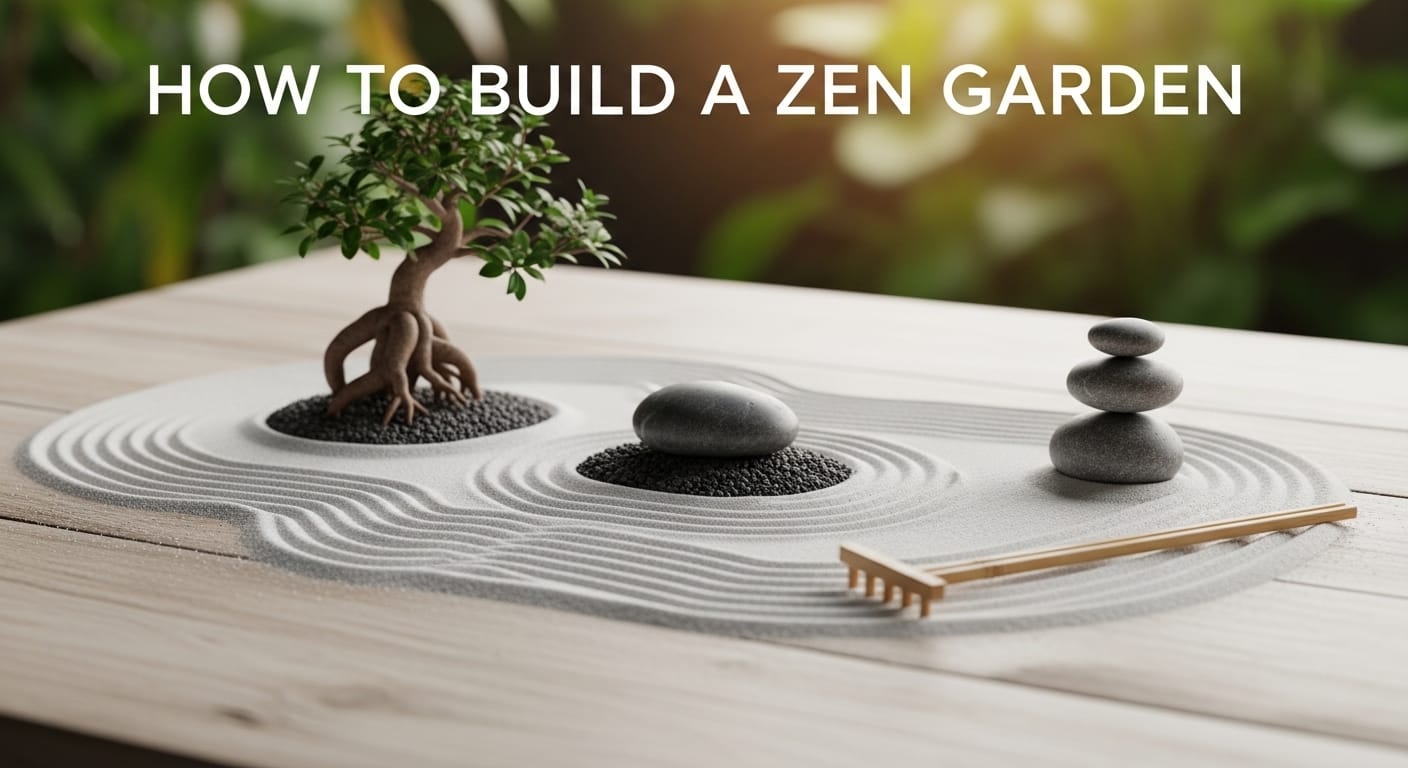
Start by filling a shallow tray with fine sand or white pebbles. Place two or three small stones off-center to act as mountains, following the rule of asymmetry (fukinsei). Use a tiny rake or a fork to draw ripples around the rocks to create your sand garden. You can also draw long, straight paths across the open spaces to create a sense of movement. This process is meant to be very calming, so feel free to smooth the sand and start over whenever you want a fresh design.
What is a Do-it-yourself Zen garden?
You might be asking yourself, “Can I really build this myself?” Yes, an easy Zen garden design is possible for anyone. You can find rock Zen garden materials at a local hardware store. Use local stones to save money. You can even use a wooden frame to hold the sand. It is a great, eco-friendly design.
Conclusion
A Zen garden is a bridge between nature and your inner thoughts. By using rock elements and simple paths, you create a world of calm. You do not need a giant space to feel the benefits of minimalism. Even a small corner can become a powerful meditation garden. The beauty of Japanese landscaping lies in its quiet strength. It does not shout for attention. Instead, it waits for you to be ready for silence. I hope these Japan garden ideas inspire you to start digging. Your journey to a more peaceful life can begin in your own backyard today. Take a deep breath and start implementing your Zen rock garden ideas right now.
If you need professional help creating your jardin zen, you can contact us at MPR Landscapes. Our team can assist with everything from hillside landscaping and natural pools to setting up vertical gardens or container gardens for smaller spaces. Whether you want outdoor living areas with garden art & décor, a water‑wise gardens setup, or even green roofs, we bring your planting ideas to life. From a Zing garden to a perfectly zoned garden, we handle meadow gardens, contemporary gardens, and raised bed gardening with a focus on color in the garden and regional gardens expertise. Let us build your dream retreat for you.
